How Much Does a Vintage Moped Cost? A Real Breakdown
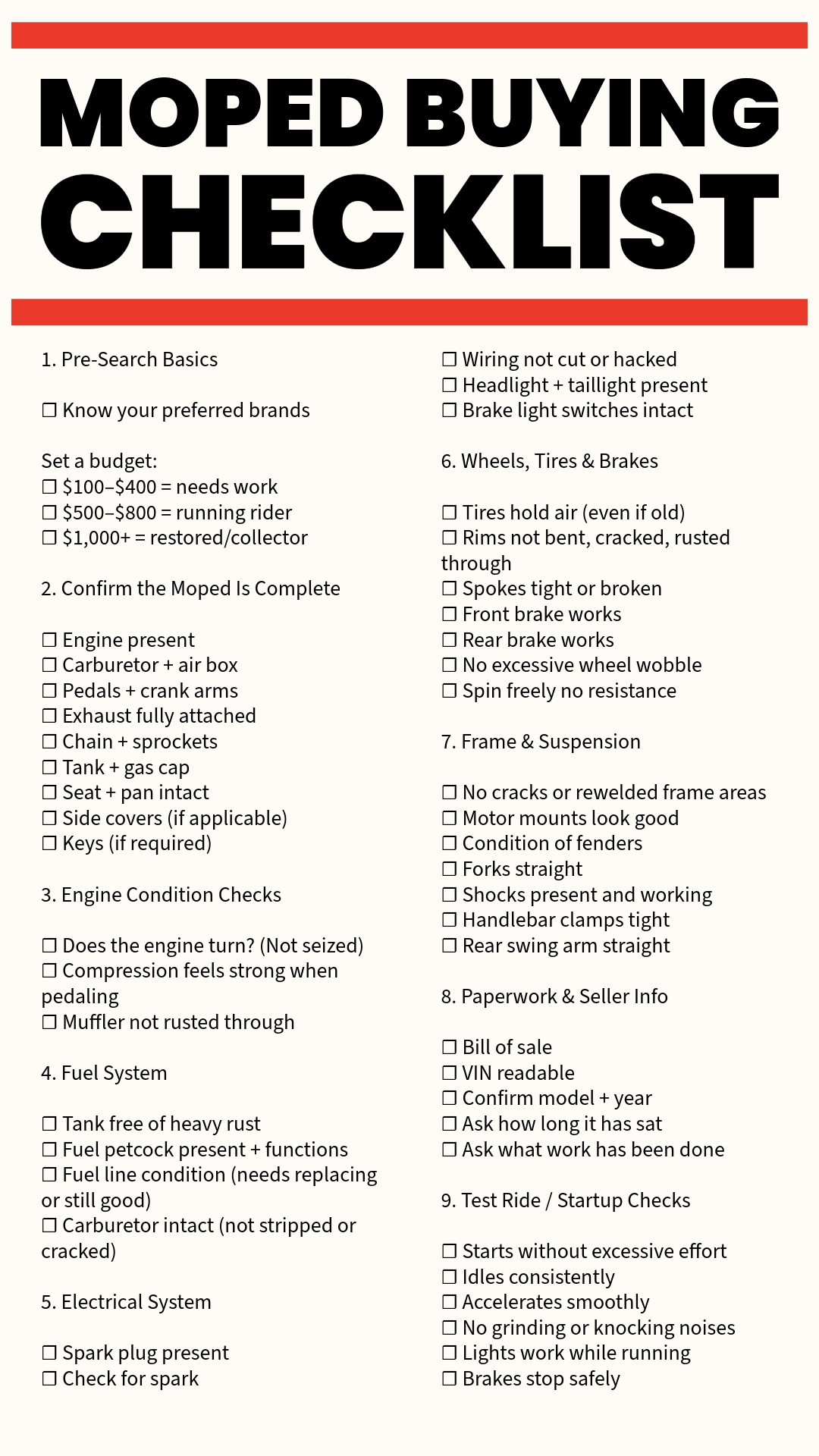
If you’re shopping for your first vintage pedal-start moped, you’ve probably already discovered the confusing range of prices online. Some mopeds sell for $50, some for $1,200, and some seem to jump into motorcycle price territory for no clear reason.
As someone who’s bought, restored, and documented mopeds from the 70s and 80s — brands like Puch, Tomos, Vespa, Motobecane, Peugeot, Honda, Derbi, and more — this guide breaks down what a vintage moped cost is actually, why prices vary, and what first-time buyers need to know before spending a dollar.
This is a mix of education, real-world experience, and the culture that makes vintage mopeds special.
 What You Can Expect to Pay for a Vintage Pedal-Start Moped
 What You Can Expect to Pay for a Vintage Pedal-Start Moped
Vintage 2-stroke mopeds from the 70s–80s generally range from:
$50 to $500: Project and Non-Running Mopeds
This is where most first-time buyers start.
But here’s the truth:
Almost every moped under $500 needs work.
Sometimes a lot of work.
Typical issues at this price:
- Seized engines
- Worn or cracked tires
- Torn seats
- Rusted tanks
- Missing or incorrect parts
- Old wiring or brittle cables
- Bad brakes
- Missing titles/paperwork
These bikes are great if you’re willing to wrench, learn, and spend money on parts.
$600 to $1,200: Ready-to-Ride or Lightly Restored Mopeds
These mopeds have usually been:
- Freshened up
- Tuned
- Fitted with new cables, tires, brakes
- Proven to start, run, and stop
They’re priced higher because someone else already put in the hours (and dollars) you won’t have to.
This is where many new riders want to shop, but not always where they actually look first.
One thing you learn in the moped community. New buyers want ready-to-ride mopeds for project-bike prices. They often don’t realize the labor, parts, and frustration behind a running, “reliable” vintage machine.
Real Restoration Costs: A Case Study
Here’s a true example from my own experience:
I bought a Puch Maxi for $200.
It looked complete, but:
- The engine was seized
- Tires were dry-rotted
- The tank had rust
- The paint was rough
- The seat was torn
- The brakes didn’t work
When the restoration was complete, the total cost was:
$1,421
That included:
- Tires and tubes
- Cables
- Brakes
- Paint, polish, and cosmetics
- Engine rebuild
- Replacement hardware
- Rust treatment
- Seat replacement
This is the reality of vintage mopeds:
A cheap purchase price does not mean a cheap final cost.
Regional Pricing: Where Mopeds Are Cheaper (and More Expensive)
Based on years of buying, selling, and talking to mopeds people across the scene:
Midwest: Best Prices
Most mopeds were originally sold in the Midwest, it seems like, in the 70s–80s, so:
- More supply
- More project bikes
- Fair prices
- Easier to find good deals
East Coast: High Demand
Major cities in the east coast usually sell for higher prices.
Southwest & Smaller Markets Harder to Find
Mopeds are:
- Less common
- Less appreciated
- Prices can be high but buyers often expect to pay very little
If you’re in one of these areas, shipping from the Midwest might even be cheaper than buying locally.
Brands That Are Worth the Money (and Ones to Avoid)
Based on real restoration and riding experience:
Best Value / Most Reliable
- Puch: dependable engines, parts availability, great platform
- Honda: solid engineering, parts availability
- Derbi: strong performance and quality
- Tomos: excellent for parts and upgrades, user friendly, easy to start.
- Vespa (Piaggio) Mopeds — strong runners, excellent bones
These are brands that are truly worth paying for.
Not Great Platforms In my opinion
- Sachs
- Batavus with Laura engines
- Trac
Some of these mopeds look great, but the engine platforms aren’t ideal for beginner wrenching or upgrades. Though if you find one for a great price or running, I would consider.
Do Vintage Mopeds Have Ongoing Ownership Costs?
Once you’ve fully restored a moped with:
- New tires/tubes
- Fresh brakes
- Cleaned tank
- Rebuilt engine
- New cables
- Solid electricals
You’ll find they are very low-maintenance machines.
Things you may encounter over time:
- Small parts loosening
- Occasional 2-stroke tuning
- Vintage wear and tear
Fuel cost depends on whether the engine is stock or has performance upgrades. But overall, a properly restored vintage moped is surprisingly inexpensive to keep running.
So, How Much Does a Vintage Moped Cost?
Here’s the honest breakdown for first-time buyers:
Want a project?
Expect:
- $100 to $500 for the bike
- $300 to $1,000 for repairs/restoration
- Lots of learning and fun
Want something ready to ride?
Expect:
- $800 to $1,200+ for a solid, reliable vintage moped
Want something perfect?
A fully rebuilt, dialed-in, restored vintage moped:
- $1,200 to $2,000+, depending on brand and upgrades
The Culture Matters Too
At rallies, you’ll meet dozens of riders with the same story:
“I bought it cheap… and then realized how much work it actually needed.”
That’s part of the charm.
Owning a vintage 2-stroke pedal-start moped isn’t just transportation its community, wrenching, nostalgia, and the thrill of hearing that little engine come to life.
Final Thoughts
If you’re buying your first vintage moped, go in with realistic expectations:
- Cheap mopeds aren’t actually cheap
- Running mopeds are worth paying for
- The best brands save you money in the long run
- Restoration costs can quickly pass the purchase price
- Once restored, they’re incredibly low-maintenance and fun
When you know what to expect, you won’t just buy a moped — you’ll join a culture.